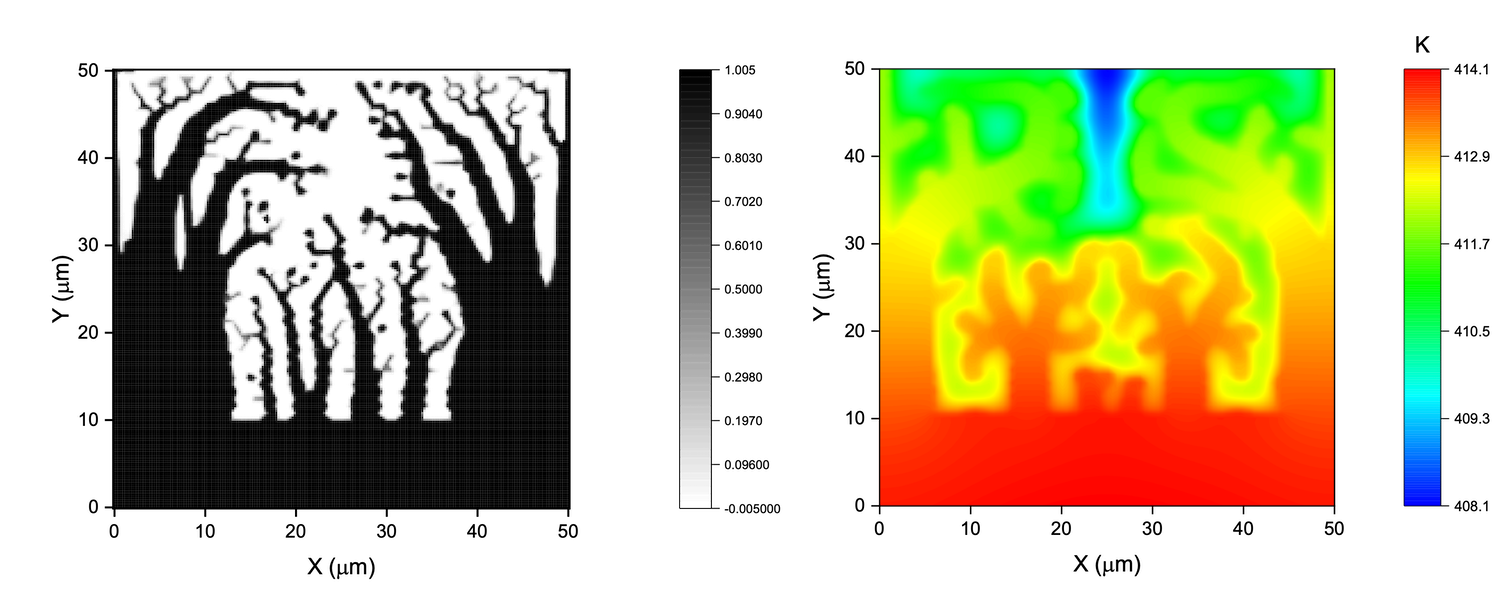
Physics-informed AI
PINN models and topology optimization for thin-film evaporation in hierarchical structures.
Thermodynamics, heat transfer, interfaces, and physics-informed AI
The NanoTherm Research Group studies thermodynamics, heat transfer, fluid mechanics, and interfacial phenomena with emphasis on energy conversion, phase change, water, icing, and physics-informed AI.
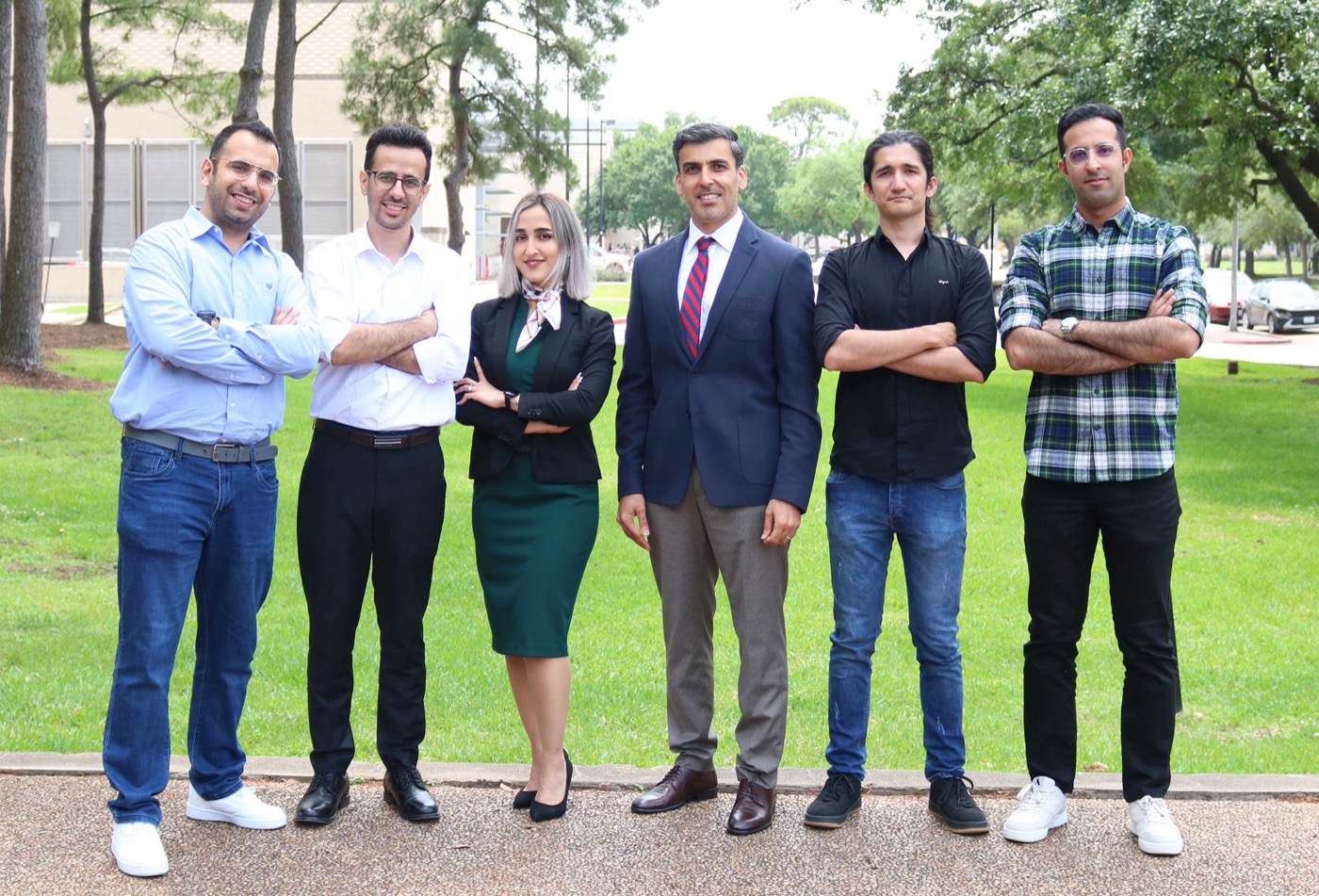
Our work combines theory, computation, and experiments to understand heat-fluid-surface interactions and to develop efficient thermal and energy systems.
PINN models and topology optimization for thin-film evaporation in hierarchical structures.
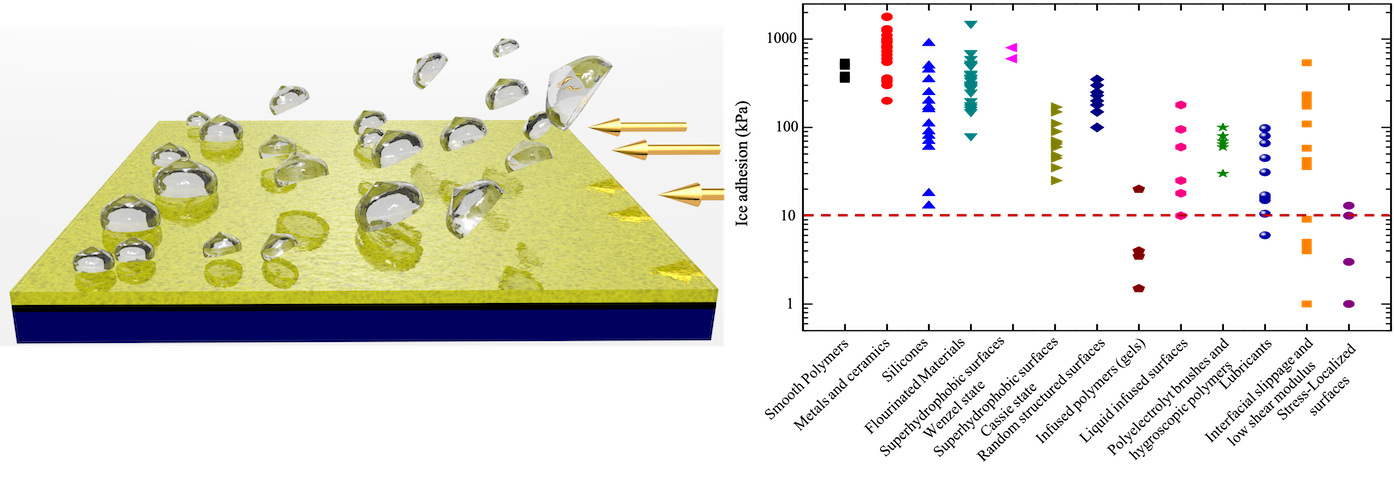
Ice nucleation, frost growth, adhesion, and ice-shedding behavior on surfaces.

Transport of heat and fluids in nano/molecular channels and interfaces.
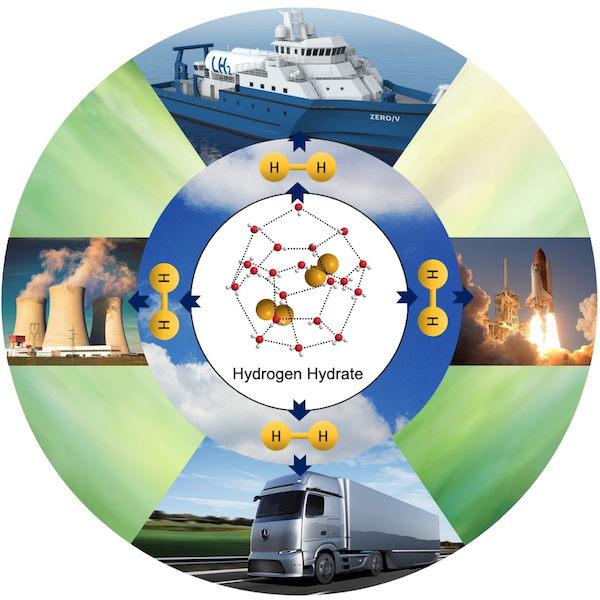
Formation, stability, and transport phenomena in hydrate-based storage systems.
Learning and research in thermodynamics, heat transfer, interfaces, and physics-informed AI continue to motivate our group. We focus on problems where interfacial transport and thermal processes are central to energy and environmental applications.
A major objective is to understand and control heat-fluid-surface interactions across multiple length and time scales. These interactions govern evaporation, condensation, wetting, freezing, transport in confinement, and the performance of many thermal systems.
The group uses mathematical modeling, numerical simulation, materials characterization, and laboratory experiments. Collaboration with researchers in physics, materials science, chemistry, and mechanical engineering is an important part of our work.